
When did we decide that hating your work was just part of the deal?
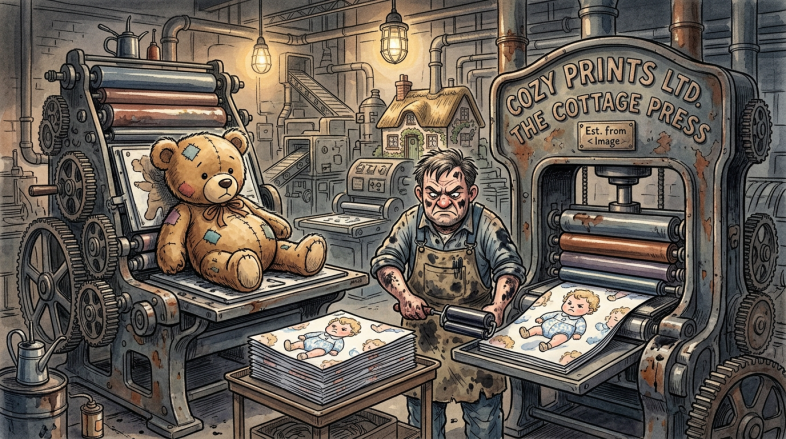
I knew a bloke once who was genuinely good at his job in a printing firm. He could run those machines well. But he hated every minute of it. He hated Fridays because knock-off time felt too far away. And I suspect he quietly dreaded Sundays because Monday was always just behind them.
I asked him once why he didn’t try something different. He said he didn’t know anything else. So I asked why he didn’t study after hours. His answer stopped me cold. He said he didn’t have the time.
This was decades ago. I haven’t spoken to him in over 40 years. But his situation stuck with me, because it wasn’t really about printing. It was about a work culture that quietly teaches people to endure rather than engage.
And that’s worth talking about, because employee engagement and work culture are two of the most discussed topics in business right now, and most of the conversation is completely backwards.
Most people think employee engagement is about perks. Better chairs. Free coffee. A ping pong table in the break room. But if the work itself feels meaningless or mismatched to the person doing it, none of that changes anything. The bloke I knew could have had the nicest printing machine in the country and still dragged himself in every Monday morning.
Real engagement starts with fit. When a person’s work connects to something they actually care about, or at least something they find genuinely interesting, the whole dynamic shifts. Not because they suddenly love every task, but because there’s a reason behind the effort.
But here’s the problem with how most organisations approach this. They treat engagement as something you do to employees rather than something you build with them. Surveys go out. Results come back. A committee forms. A strategy document appears. Six months later, not much has changed.
The reason that cycle keeps repeating is because it’s built on the assumption that the structure of the organisation is fixed, and the people have to adapt to it. That assumption made sense in a slower world. It doesn’t hold up now.
We’re in a period where things shift fast. Industries change. Markets move. What worked reliably three years ago may already be outdated. A work culture that rewards rigid compliance over flexible thinking isn’t just disengaging for the people inside it. It’s genuinely risky for the organisation as a whole.
The most engaged people I’ve ever encountered, whether in employment or running their own thing, share one trait. They treat their situation more like a game than a fixed system. Not in a flippant way. More like the way a skilled Games Master runs a Role Playing Game session.
A Games Master doesn’t script every outcome. They set up the environment, understand the variables, and stay ready to adapt when players take unexpected turns. They don’t panic when things go sideways because the whole setup is designed for variability. The flexibility is built in from the start.
That mindset is what’s missing from most conversations about employee engagement and work culture. We keep trying to build certainty into environments that are inherently uncertain. And when people feel like they have no room to move, no ability to respond to what’s actually happening around them, they disengage. Not out of laziness. Out of frustration with a system that doesn’t let them think.
If you’re building a team, or you’re thinking about your own work situation, the most valuable shift you can make is this one. Stop optimising for consistency and start optimising for adaptability. Build in the capacity to pivot. Reward people who notice what’s changing and respond intelligently rather than just following the procedure that was written for a different set of circumstances.
And if you’re the one sitting in a role that feels like it’s slowly grinding you down, the good news is that the barriers that trapped people a generation ago are mostly gone. You don’t need to sit in a classroom after a long shift. You don’t need to spend thousands on a credential. The tools available now mean you can learn almost anything at almost any pace, on your own terms.
The conventional approach will still teach you the conventional way. That has value. But if you’re building something new, or trying to adapt to a landscape that keeps shifting, you need thinking frameworks that were designed for variable environments. Not rigid manuals written for the world that used to exist.
I put together a PDF that walks through exactly this kind of thinking. It’s built around the same principles a Games Master uses to set up for the unpredictable, and it applies directly to building a business or income stream that can actually flex with what’s happening around you.
If this resonates with you, have a look: