
When video software refund policies say one thing and do another, sellers pay the price
Last week I bought two different video-related products. Both had sales pages that made confident promises. Neither product could actually do what was advertised.
So I did what any reasonable person does. I asked for my money back.
One seller processed the refund immediately. Clean, no fuss, exactly what a decent refund policy looks like in practice. The other seller sent offer after offer, trying to talk me out of the request. Four days passed before that refund finally came through, despite their website promising a no-questions-asked process.
This is the gap that damages trust in digital products. Not just for buyers, but for sellers too.
What a video software refund policy actually promises
Most video software refund policies are written to sound generous. No questions asked. Instant processing. Full money back. But when a seller delays, negotiates, or buries the process behind multiple retention offers, they are not honouring the policy they published. They are hoping the customer gets tired and gives up.
New EU regulations that took effect this year have made this harder to get away with. The rules now require a visible, easy-to-use cancellation pathway for customers. That old approach of hiding the cancel button deep in a settings menu is no longer a reliable strategy for keeping unhappy customers on the hook.
For buyers, this is good news. For sellers who actually deliver what they promise, it changes very little because they were honouring refunds already.
But it has opened a different problem entirely.
The fraud risk that decent refund policies create
Here is the part that does not get talked about enough. When a refund policy is easy and frictionless, most people who use it are genuine. They bought something that did not work for them, they asked for their money back, and that is entirely fair.
But some people are not genuine. They buy a PDF or a video course, consume the content, and then request a refund knowing full well they intend to keep using it. Because with digital products, once the file is downloaded or the video is watched, the seller has no way to take it back.
Or at least, they had no way.
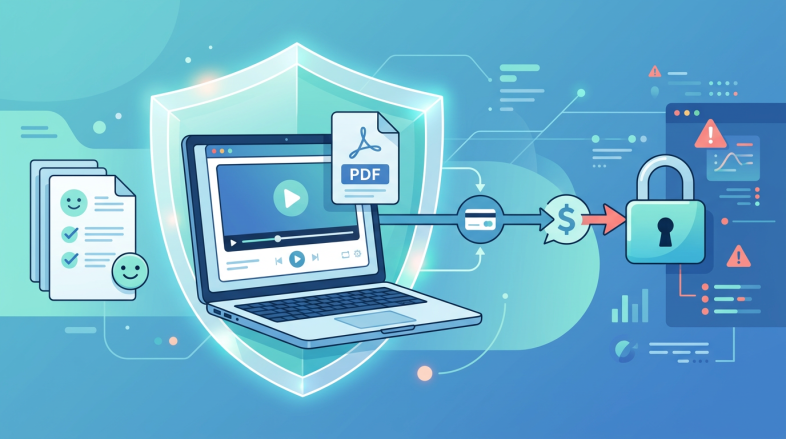
This is the problem I built a solution for. I wanted sellers to be able to honour refunds properly and fairly, without simply gifting their product to anyone who asks for their money back after using it. So I created a way to revoke access to a PDF or video at the point a refund is granted.
If the refund is genuine, the buyer loses access, gets their money back, and the transaction is settled fairly. If someone was planning to claim a refund while keeping the product, this stops them.
What this means for anyone selling digital products
If you sell PDFs, video courses, or any digital product with a refund policy, the EU rule changes are worth paying attention to even if you are not based in Europe, because the expectation of easy cancellation is spreading across all markets.
Honouring refunds is not optional, and it should not be. If your product does not deliver what the sales page says it does, the buyer deserves their money back. That is just basic decency in business.
But decency does not mean you have to absorb fraud. You can protect your product and still run a clean, honest refund process.
If you want to see how I built that protection, and try it yourself, you can get a 7-day trial here: