Most people trying to grow an email list are solving the wrong problem.
They obsess over sign-up rates. They split-test opt-in forms, run lead generation ads, swap out lead magnets every few weeks, and watch their subscriber count tick upward. And when revenue stays flat or open rates keep sliding, they assume they just need more subscribers. So they go back to the top of the loop and do it all again.
But the number on your subscriber dashboard is not the thing that determines whether your email list makes you money. What determines that is how many of those subscribers are still genuinely paying attention 30, 60, or 90 days after they signed up.
This is the email subscriber retention problem, and it is far more common than most email list guides will admit.
Here is the maths that changed how I think about this. If you have a monthly churn rate of 5 percent and you cut it to 2.5 percent, in 12 months you are carrying almost double the active, engaged subscribers. Do the same amount of work in the other direction, and boost your sign-up rate by 2.5 percent instead, but your churn stays where it is, and you are just filling a leaky bucket faster. You are running harder to stand still.
Retention compounds. Sign-ups do not. That one idea is worth sitting with for a moment before you do anything else.
So if retention is the lever that actually moves the needle, why does almost every conversation about email list growth focus on acquisition? Because acquisition is visible. You can see the subscriber count go up. Retention is quieter. It happens in the background, in open rates, in reply rates, in revenue per subscriber, in deliverability scores. Those numbers are less exciting to screenshot.
But they are the ones that actually matter.
Where subscriber quality actually gets decided
Here is something I have discovered after years of building and rebuilding my own email list. Subscriber quality is not decided after someone opts in. It is not decided by your welcome sequence, your nurture emails, or how often you send. It is decided in the moment before the opt-in, by who you attract and why they come.
If someone joins your list because of a giveaway that has nothing to do with your topic, their chance of being a long-term engaged subscriber is close to zero. If someone joins because they read something you wrote that solved a specific problem they were actively trying to solve, their chance of still being engaged in six months is dramatically higher.
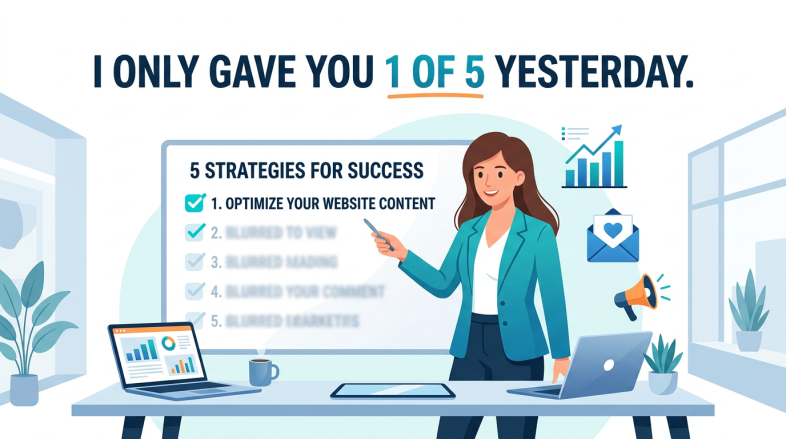
This is the insight behind what I call the Quality Subscriber Playbook. Not a complicated system. Five steps, most of which take less time than another round of tweaking your opt-in form.
Step one: Define your subscriber before you do anything else
Not your niche. Not your topic. Your specific subscriber. The person who, when they read your content, feels like you wrote it directly for them. Their age, their frustration, what they have already tried, what they are quietly hoping for. When you are this clear on who you are writing for, every other step in this system becomes easier, because you have a filter for every decision.
Step two: One lead magnet that solves exactly one problem
Not a bundle of ten PDFs. Not a five-day email course covering the entire topic. One thing that solves one specific problem for one specific person. The more targeted your lead magnet, the more self-selecting your subscribers become. Someone who downloads a guide called ‘How to grow a micro-niche website on a small budget’ is already telling you a great deal about themselves. That is valuable information, and it means your welcome email lands in a much more relevant inbox.
Step three: Borrow trust that others have spent years building
Find three to five newsletters that your ideal subscriber already reads. These are people who have already done the work of building an audience that trusts them. When you appear in those spaces, whether through a newsletter swap, a mention, a guest contribution, or a recommended tools section, you arrive pre-endorsed. The subscriber who comes to you via a trusted source they already follow is a fundamentally different prospect from someone who found you through a cold Facebook ad. They come with a baseline of goodwill that acquisition-only strategies simply cannot manufacture.
Step four: A welcome email that does something most welcome emails never do
Most welcome emails are a hello, a link to the lead magnet, and a quick summary of what is coming. They are fine. They are also forgettable. The welcome email I shared recently does something different. Instead of just talking at a new subscriber, it asks them to do something small but specific. Something that requires a reply. Not a survey, not a quiz link, just a single, genuine question that a real person would want to know the answer to. Why does this matter? Because a subscriber who replies in the first 48 hours has signalled something to your email service provider. They are engaged. That signal improves deliverability for everyone on your list, and it gives you information about who this person actually is.
Step five: Tag by source, check the numbers at 30 days
This is the step most people skip, and it is the one that makes the entire system smarter over time. When you tag every new subscriber by where they came from, you can look back in 30 days and see which sources are producing your best subscribers. Not just the most subscribers. The best ones. The ones who opened the last four emails. The ones who clicked. The ones who replied. When you know which source produces those people, you do more of that and less of everything else. The system self-improves.
A smaller list that is actually engaged will always beat a larger list full of people who forgot they subscribed. Always. In deliverability, because inbox placement depends on engagement signals. In revenue, because people who read your emails are the people who buy from you. And in something harder to measure but just as real: in how your brand feels to the people still paying attention.
One more thing worth saying, because I think it is the most important idea in this entire piece.
Your email list is the only traffic source you own. If Google changes its algorithm tomorrow, your search traffic can evaporate overnight. If Facebook decides your ad account violates a policy it invented last week, your campaigns stop. If a platform folds, or throttles organic reach, or changes its terms, there is nothing you can do about it. Use those platforms to bring people to your landing page by all means. But the moment someone is on your list, that relationship belongs to you. No algorithm touches it. No platform cancels it.
That is why building your list the right way is not just an email marketing decision. It is the foundation of everything else you build online.
If you want to work through the full Quality Subscriber Playbook, all five steps, I have put it together in one place: