
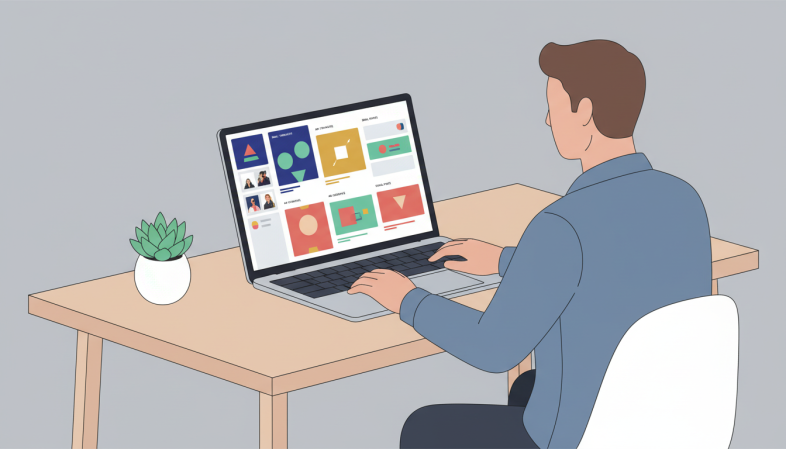
When you finally write a headline that makes people stop scrolling, it rarely comes from nowhere. Most of the time, it comes from something you saved months ago, a subject line that made you open an email at 11pm, a sales page that had you reaching for your credit card before you even realised what was happening. That collection of borrowed inspiration is called a swipe file, and if you do not have one, you are making your marketing harder than it needs to be.
Swipe file marketing is one of the oldest and most practical habits in the business. The idea is straightforward: whenever something gets you to take action, an email you opened, a video you watched all the way through, a sales page that converted you, you save it. You are not saving it to copy it. You are saving it because whatever that piece of content did to you, it could do to your audience too. The psychology that moved you is almost certainly the same psychology that will move someone else.
Most people think great copy comes from inspiration or raw talent. But the best marketers I have studied over the years treat swipe file marketing as a system, not a lucky accident. They are constantly filing things away. And when they sit down to write, whether it is an email, a landing page, or a video script, they open that file and let the ideas collide with their own thinking. That is when something useful emerges.
So what should go into a swipe file? The short answer is anything that worked on you personally. Subject lines that made you open an email when you had already decided to close the tab. Headlines that stopped your thumb mid-scroll. Calls to action that felt impossible to ignore. Sales page structures where you found yourself nodding all the way down the page. Video sales letters that kept you watching even though you knew you were being sold to. If something moved you, it belongs in the file.
For written content, adding things to your swipe file is easy. You copy the text, paste it into a document or a dedicated app, and tag it so you can find it later. Some people use Notion. Some use a simple Google Doc folder. Others use tools built specifically for swipe files. The format matters far less than the habit of consistently adding to it.
The harder problem is video. Most of the most powerful sales content online lives in video format, VSLs, webinar replays, product demos, long-form pitch videos. And you generally cannot just right-click and save them. For years I got around this by using screen recording tools like Camtasia, CapCut, or Loom. I would hit record, play the video, and capture the whole thing. It works. But it ties up your computer for the entire duration of the video, and if you are trying to save a 90-minute webinar replay, that is a significant chunk of your day.
I got tired of that limitation, so I built something better. I asked Claude to help me put together a tool that could download videos in the background while I kept working. Between us, we built exactly that. It does not work with every video on the internet, because some platforms actively block downloads, but it works with a significant number of them. I have not stress-tested it on a live webinar stream yet, but I would expect it to handle a webinar replay well enough.
The reason a background downloader matters is not just convenience. It is because the friction of saving something is what determines whether you actually build the habit. If saving a video means stopping what you are doing and babysitting a screen recorder for an hour, most people simply will not do it consistently. Remove that friction, and the swipe file actually grows.
Once you have a decent swipe file built up, the way you use it is just as important as building it. When you are stuck on a headline, search the file for headlines in a similar category. When you are writing an email and cannot find the right opening line, look at five subject lines that worked on you and notice the pattern. Are they asking a question? Are they implying something is missing? Are they calling out a specific frustration? Those patterns are the raw material for your own version.
Swipe file marketing is not about theft. It is about pattern recognition. Nobody owns a curiosity hook or a problem-agitation structure. What you are collecting is proof that certain approaches work, because they worked on you, a real human being with real scepticism and a short attention span.
If you are just starting out, give yourself a month to build the file before you worry about using it. Open every email you receive with the question: why did I open this one? Save the ones with compelling subject lines. When you land on a sales page and feel yourself reading further than you expected, save it. When a video autoplays and you do not reach for the stop button, find a way to save that too.
After thirty days you will have a resource worth more than most paid courses on copywriting, because every item in it is proven to have worked on at least one person: you.
If you want to go deeper on how I use prompts and tools like Claude to build practical things for my online business, that is exactly the kind of thing I cover in my prompt guide.
Check out my prompt guide here: