
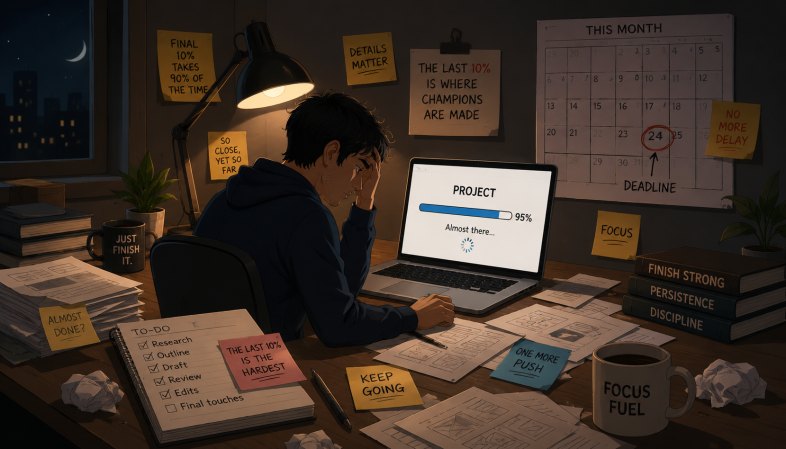
There’s something universally frustrating about being 99% done with a project only to have it grind to a halt over the smallest details. Whether you’re building an online business asset, developing a micro-niche website, or just trying to get a simple tool working properly, those final steps always seem to take longer than expected.
I’ve been dealing with exactly this whilst putting the finishing touches on a new automated coaching tool. You know how it goes – everything looks perfect, you think you’re minutes away from launch, then one tiny issue brings everything to a standstill.
The “One Minute Remaining” Syndrome
We’ve all seen it. That progress bar that sits at 99% for what feels like forever, or the installation that promises “one minute remaining” and then takes another five minutes to complete. Microsoft Windows updates are notorious for this, but it happens with everything from app installations to project completions.
This phenomenon isn’t just a quirk of software – it reflects a deeper truth about how complex systems work. The final 1% often contains the most intricate problems, the edge cases that only surface when everything else is working.
When Building Goes Wrong at the Finish Line
In my case, the issue was timezone handling. Comparing UTC with Australian Central Time turned out to be more complicated than expected. When you’re building a tool that’s supposed to send exactly one email per day, getting the timing wrong isn’t just a minor glitch – it breaks the entire purpose of the system.
The frustrating part is that you can’t properly test these time-sensitive features without waiting 24 hours between each attempt. Unlike a website where you can refresh the page and see immediate results, some functionalities force you to slow down and wait.
Why Testing Matters More Than You Think
This brings up an important principle for anyone building online assets: if it doesn’t work perfectly for you as the creator, it definitely won’t work for your users. Whether you’re developing a WordPress plugin, creating a digital product, or setting up an automated system for your micro-niche website, thorough testing isn’t optional.
The temptation is always there to rush the final stages, especially when you’re excited about launching. But those seemingly minor bugs and glitches are exactly what separate professional, reliable assets from amateur attempts that frustrate users and damage your reputation.
The Compound Effect of Patience
This experience reinforces something I talk about regularly: the power of not quitting when things get difficult. Building sustainable online income streams requires persistence through these frustrating moments when progress slows to a crawl.
Every successful online business owner has stories about projects that stalled just before completion. The difference between those who succeed and those who don’t often comes down to who’s willing to work through these tedious final phases.
Making Setbacks Work for You
When a project hits these inevitable slowdowns, it’s actually an opportunity to improve your processes. Each setback teaches you something about planning, testing, or implementation that makes your next project smoother.
For my audience of entrepreneurs over 50, this patience often comes more naturally than it does for younger builders. You’ve likely seen enough projects through to completion to know that the final stretch is always the hardest, whether you’re renovating a house, learning a new skill, or building an online asset.
The Light at the End of the Tunnel
Despite the current delays, this tool is very close to release. The core functionality works perfectly – it’s just these timezone edge cases that need sorting. Once resolved, I believe this will be genuinely transformational, not just for my own business operations but potentially for anyone managing multiple small online assets.
Practical Takeaways for Your Projects
When your own projects hit these frustrating slowdowns, remember that this is normal and expected. Budget extra time for the final 10% of any project – it almost always takes longer than the first 90%.
Use these delays as opportunities to double-check everything else. Often, when you’re forced to slow down on one aspect, you discover improvements you can make elsewhere.
Most importantly, maintain those positive expectations. All good things really do come to those who wait patiently whilst continuing to make progress, even when that progress feels painfully slow.
The key is distinguishing between productive patience – where you’re actively solving problems – and passive waiting where nothing gets done. Keep working the problem, keep testing, keep iterating. That’s how small assets become reliable income streams over time.