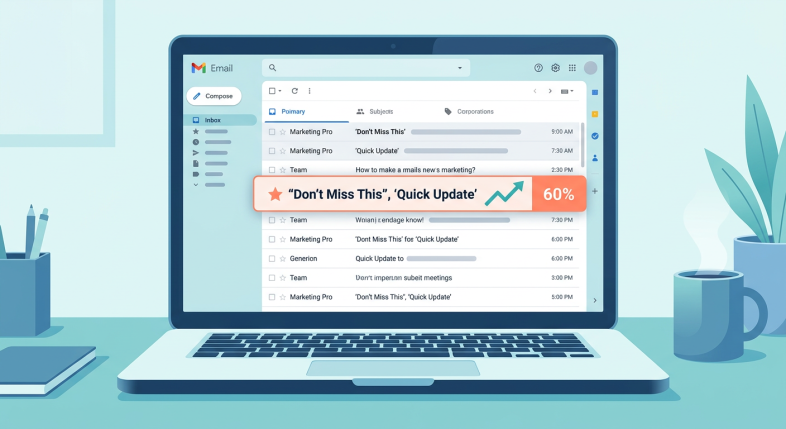
When a congratulations email from a software platform you barely remember signing up to lands in your inbox, it has a way of stopping you mid-scroll.
That is exactly what happened to me recently. IFTTT sent me a message celebrating my seven-year anniversary with their platform. Seven years. And my honest first reaction was: really? Because I barely open it anymore.
So it got me thinking about the whole landscape of workflow automation tools and how much things have changed since those early days of connecting apps together with simple if-then recipes.
Back when I first signed up to IFTTT, it felt genuinely exciting. The idea was simple: if this happens over here, then do that over there. Connect your Gmail to a spreadsheet. Post a tweet when you publish a blog. Save Instagram photos to Dropbox. It was lightweight, almost playful, and it worked well enough for those basic connections.
But the online business world has moved on considerably since then. And so have the tools built to automate it.
The difference between IFTTT and something like Make or n8n is roughly the difference between a pocket knife and a full workshop. IFTTT handles single-step triggers well enough. But when you need a workflow that branches, makes decisions based on data, loops through records, or interacts with a user across multiple steps, you need something with more under the hood.
This is why I have largely migrated away from IFTTT for anything serious. There are still two old automations running that I set up years ago and never bothered switching off, but they are the exception. For everything that actually matters in my online business today, I use Make or n8n.
And n8n in particular has become the one I reach for when a workflow needs to do something genuinely sophisticated.
The best example I can give right now is something I built called the Kaizen Coach. It is an n8n workflow that sends a daily email prompt and actually interacts with the user based on their response. Not just a one-way blast of content, but a real back-and-forth that tracks where someone is and nudges them forward accordingly.
Kaizen, if you are not familiar with the term, is a Japanese concept built around continuous improvement through small, consistent daily actions. The idea is not to transform everything overnight. It is to move forward a little each day and let that compound over time. It suits the way I think about building online income, and it suits the kind of audience I work with.
I have been running two versions of the Kaizen Coach for testing purposes. We are on day 23 at the time I am writing this, and I have already caught and fixed a couple of bugs that showed up in real usage. But the core behaviour is solid and I have genuinely noticed changes in my own thinking and habits because of the daily prompt. That is the point of the thing.
Now, if you are newer to workflow automation tools and wondering where to start, here is what I would actually tell a friend.
First, IFTTT is still fine as a beginner’s introduction to the idea of connecting apps. If you have never automated anything in your business, spending an hour on IFTTT to understand the concept costs nothing and teaches you the basic logic. Start there if the whole idea feels unfamiliar.
Next, once you have outgrown the simple if-then structure, look at Make. It has a visual canvas that makes it easier to see what your workflow is actually doing, and the free tier is generous enough to test most ideas before you commit to paying anything.
Finally, when you are ready to build something that genuinely thinks, branches, loops, and interacts, that is when n8n becomes the right tool. It is open source, which means you can self-host it and keep your costs down. For someone building a lean online business on a sensible budget, that matters.
The broader point I want to make is this. Workflow automation tools are not just for tech companies or developers. They are for anyone running an online business who wants to stop doing the same manual tasks every single day. If you are writing the same email sequence by hand, copying data between platforms, or manually following up with people who opt in to something, there is almost certainly an automation that could handle it for you.
And because the tools have matured so much in the past few years, the barrier to building these systems is genuinely lower than it has ever been.
Seven years ago, IFTTT felt like magic. Today it feels basic, because the tools that came after it are so much more capable. That is not a criticism of IFTTT. It is just the natural progression of a fast-moving space.
If you want to see what a more sophisticated workflow actually looks like in practice, you can test the Kaizen Coach I built right now:
https://kaizen-coach.surfer3l337.workers.dev/
It is a live example of what n8n can do when you point it at a real problem.