
When Motor Racing Reliability Teaches You Something Business Schools Never Will
The most famous saying in motor racing is not about speed. It is about finishing.
“To finish first, first you have to finish.” It sounds obvious until you watch it fall apart in real time, right in front of you, with three laps to go.
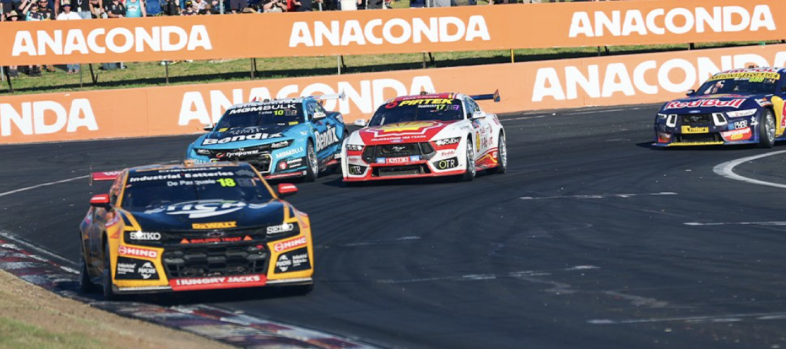
This past weekend at the Bathurst 1000, the race Australians call The Great Race, which has been run on the same mountain circuit for 63 years, the car that should have won did not finish. It ran out of fuel on the final lap. The driver had been nursing it home carefully, managing his fuel load, holding a comfortable lead. The race was his.
Then the safety car came out.
With three laps remaining, the entire field bunched up behind the safety car. When racing resumed, he had to push hard to defend his position. That hard racing burned through the fuel he had been so carefully saving. He did not make it to the finish line.
Think about what that means in the context of motor racing reliability. These teams spend extraordinary amounts of money. The cars run at an average of roughly 165 km/h across the whole race. Every system, every tyre, every fuel calculation is planned in meticulous detail. And still, something outside anyone’s control changed everything in the space of three laps.
That is the real lesson motor racing teaches about reliability and finishing. It is not just about building a fast car. It is not just about having the best strategy. It is about what happens when the plan meets reality and the plan loses.
Motor racing reliability, at the elite level, is not only a mechanical question. It is a question of how you respond when things go wrong that you did not cause and could not have predicted.
No one watching that race blamed the team for the safety car appearing. But no one handed them the trophy either.
So how does this apply outside the racetrack?
In business, particularly if you are building something online, perhaps for the first time later in life, the same dynamic plays out constantly. You can do everything right. You can follow the advice, build the pages, write the content, set up the offers. And still find that sales are not coming.
Most people assume when that happens that they have done something wrong. But often the problem is not a failure of effort. It is a blockage somewhere in the process that they cannot see because they are too close to it. The safety car appeared and they ran out of fuel, but they do not know which lap it happened on.
The difference between motor racing and business, though, is this. In motor racing, when something goes wrong and you find a solution, that solution belongs to your team. In business, when you find a solution to a real problem, you can share it. You can turn that solution into something that helps other people who are stuck in the same place.
Because if you are hitting a wall, there are others hitting the same wall. And they are looking for someone who has already worked out how to get through it.
I built something for exactly this situation. It is called Have A Go, and it exists because thinking you are doing everything right and still not making sales is one of the most demoralising experiences in online business. This 30-day challenge is designed to break the shackles, to help you find where the blockage is and work through it.
If you are in that position right now, or you have been there recently, this is worth a look.
Start the 30-day challenge to break the shackles:
The car that ran out of fuel at Bathurst was fast enough to win. The team was skilled enough to win. What stopped them finishing had nothing to do with their ability. Sometimes the gap between doing the right things and getting the result is just one problem you have not identified yet.
Finding that problem is the whole point.