
When 1,300 visitors buy nothing, the problem is almost never your offer
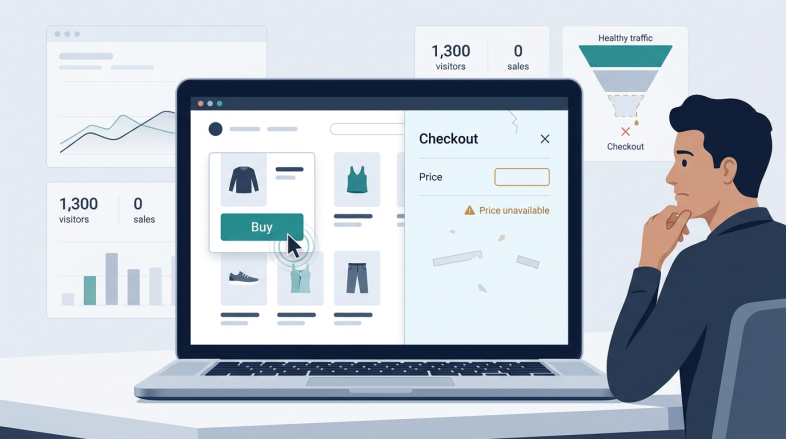
Last October I pulled up my stats and stared at them for a good few minutes. 1,300 page views. 1,171 unique visitors. Thirty days of traffic from a single LeadsLeap ad doing most of the heavy lifting. And at the bottom of the column where sales should have been: zero.
Most people assume a result like that means the offer is wrong, or the niche is dead, or the price is too high. But conversion rate optimisation is rarely about any of those things. More often it is about one broken step in the journey your buyer takes between clicking your link and handing over their money.
In this case, the broken step was a single button.
LeadsLeap displays your landing page inside an iframe on its own site. That is worth knowing before you run a single ad there. Because if your checkout page relies on scripts or redirects that do not behave correctly inside an iframe, your buyers see something strange. In my case, they clicked the buy button and landed on a checkout page with no price showing. No price. Just a blank field where a number should have been.
Did people bail? Almost certainly. Would I have bought? Not a chance.
Here is the part that stings most in terms of conversion rate optimisation: I tested the page. I just tested it the wrong way. I went directly to the URL of the page and everything looked fine. What I did not do was click through from inside LeadsLeap the way a real visitor would. That one missing step in my testing process cost me a month of traffic.
About 60 of those 1,171 visitors stayed on the page for more than 45 seconds. That tells me there was genuine interest. The offer was not the problem. The funnel was the problem, and specifically one technical fault that only appeared when the page was viewed through an iframe.
This is what conversion rate optimisation actually looks like in practice. Not heatmaps. Not split-testing button colours. It is walking the exact path your customer walks, using the exact platform they use to reach you, and finding the thing that stops them before they buy.
The fix in my situation was straightforward: I moved the checkout to its own standalone page. Once it sat outside the iframe environment, the price loaded correctly and the button worked as it should.
After that I went through every link I had running in LeadsLeap. Many had a similar issue. Some were easy fixes. Others needed changes to the funnel itself. But I would not have found any of them if I had kept testing my pages by typing the URL directly into a browser.
If you are sending traffic to any page through a platform that wraps your content in an iframe, go and test it right now. Do not test the URL. Click the actual link the way your visitor would click it. Watch what loads. Check every step through to the final confirmation.
That single habit is worth more than most conversion rate optimisation advice you will find online, because it is based on how real buyers actually experience your funnel, not how it looks from the inside.
The eight rules to build your business are waiting if you want to go deeper: